


Fall Tree Trimming in Houston: What Healthy Canopies Need
Fall is a smart time to look up and take stock of your trees. By late October, Houston properties have made it through intense sun, heavy rain, humidity, wind, and a long growing season. A canopy may look full from the ground while hiding weak limbs, crowded branches, or storm damage overhead.
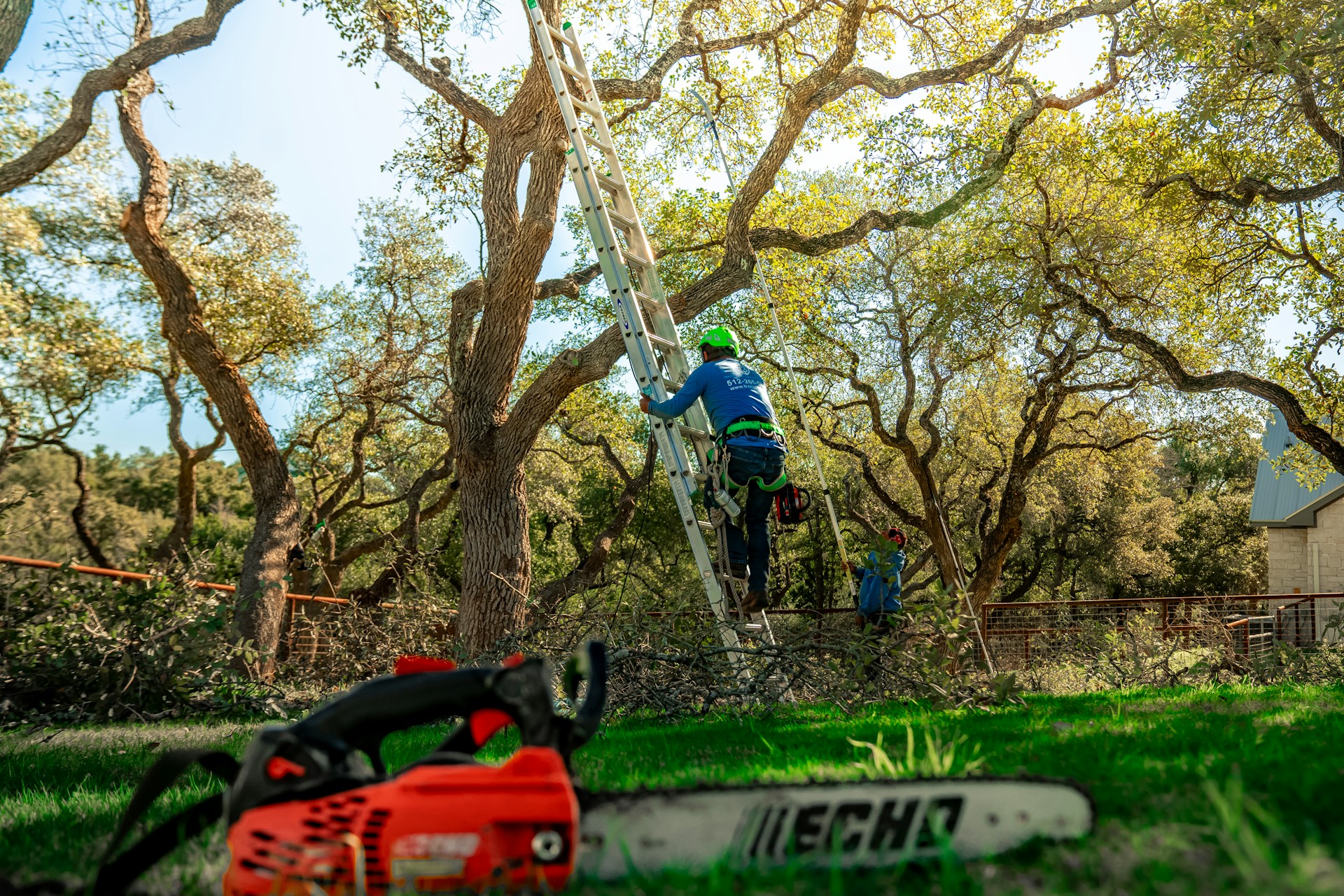
Healthy trimming is not about making a tree look small. When we provide tree trimming in Houston, our goal is to improve branch structure, reduce risks, increase airflow, and help trees put their energy into strong growth. That matters for homes, driveways, sidewalks, commercial entrances, and every outdoor space beneath a tree.
Give Your Trees a Healthier Fall Start
Houston trees can carry stress long after summer ends. Dry periods may weaken growth, while sudden downpours can saturate soil and expose root problems. Strong storms can also leave cracked limbs hanging high in the canopy, where they may not be easy to spot.
A fall assessment gives us a chance to identify concerns before they turn into urgent problems. On residential and commercial properties, we look at how branches are growing, where they are reaching, and whether the tree has enough room around nearby structures.
- During a professional visit, we commonly assess:
- Dead, broken, or hanging branches
- Limbs rubbing against roofs, fences, and buildings
- Low branches over driveways, patios, walkways, or parking areas
- Dense interior growth that limits air movement
- Branches growing toward utility lines or business entrances
Because we are fully insured and familiar with Houston’s weather patterns and local trees, we can help you make informed choices about your property’s canopy. Early attention often keeps a small trimming need from becoming an emergency tree removal situation.
Fall Pruning Restores Canopy Balance
Heat, humidity, and repeated storms can leave a tree looking uneven or overloaded. One side may carry more weight than the other, or fast-growing limbs may stretch farther than the tree can comfortably support. Careful pruning helps restore balance without taking away more foliage than necessary.
Our approach focuses on selective cuts. We remove damaged limbs, address crossing branches, and reduce excess weight where a branch is vulnerable. The goal is to preserve the tree’s natural shape while creating a cleaner, better-supported canopy.
Aggressive cutting can cause more harm than help. Topping a tree or stripping out large amounts of healthy growth can leave branches exposed to harsh sun and may lead to weak, fast regrowth. Severe thinning can also make a canopy less stable rather than more stable. Healthy trees need thoughtful cuts, not a drastic makeover.
When we evaluate tree trimming in Houston, we pay close attention to branch connections. Cracks, weak unions, and limbs that rub together can become bigger concerns during rain and wind. Removing the right growth at the right time can lower the strain on the tree while keeping its shade and character intact.
Tree Trimming in Houston Protects Homes and Businesses
A branch does not need to fall before it becomes a concern. Visible damage, deadwood above a parked vehicle, or a limb pressed against a roof can all signal that it is time for professional attention. Mushrooms near the base, fresh cracks in major limbs, and newly leaning trunks also deserve a closer look.
For homeowners, proactive care can help protect the places where families spend time outside. It can also reduce the chance of branches damaging vehicles, roofs, fences, patios, or neighboring property. On commercial sites, well-maintained trees help keep parking lots, sidewalks, entryways, and landscaped common areas safer for employees, customers, and tenants.
Pay attention to these warning signs:
- Broken limbs caught in the canopy
- Branches touching or growing close to utility lines
- Deadwood hanging over parking spaces or walkways
- Cracks where large branches join the trunk
- Branches extending over roofs, outdoor seating, or fences
We recommend an inspection before a problem becomes urgent. Dense canopies, weak branch unions, and storm-damaged limbs may be more likely to fail during heavy rain or high winds. If a tree is unstable, tangled in utility lines, or threatening a structure, emergency tree service is the safer choice.
Species-Specific Care Supports Long-Term Tree Health
Not every Houston tree should be trimmed the same way. Live oaks, water oaks, crepe myrtles, pines, palms, and ornamental shade trees all have different growth habits. A good trimming plan respects what each tree is meant to look like instead of forcing every canopy into the same shape.
Live oaks and other broad-canopy trees may benefit from careful clearance pruning and thoughtful weight reduction. Crepe myrtles should not be severely cut back just because they have grown tall. Pine trees and palms also need special handling, since improper cuts can permanently affect their appearance and health.
A canopy inspection should go beyond visible overgrowth. Our crew also looks for signs that may affect the next step, including decay, pest activity, trunk damage, weak limb attachments, root concerns, and possible disease. With a clearer view of the tree’s condition, you can better understand whether trimming, removal, stump grinding, or another service makes sense.
Fall Storm Preparation Starts at the Canopy
Houston’s fall weather can still bring heavy rain, saturated soil, strong winds, and late-season tropical systems. Trees with compromised roots or overloaded branches can react badly when the ground is wet and the wind picks up. Preventive trimming cannot stop every tree issue, but it can reduce hazards caused by deadwood and poorly placed limbs.
Targeted pruning lowers wind resistance in overcrowded canopies and creates better clearance around roofs, driveways, utility lines, and outdoor living areas. Healthy branches should remain whenever possible, since taking too much at once can stress the tree.
After a major storm, keep an eye out for changes such as exposed roots, a new lean, fresh cracks, or branches that were not damaged before. Keep drainage areas clear, and avoid parking or gathering beneath visibly damaged limbs. A prompt professional evaluation is the right next step when a tree no longer looks stable.
Plan Ahead Before Winter Arrives
Fall tree care gives your property a chance to head into the next season with a stronger, cleaner canopy. Addressing damaged limbs, overcrowded growth, and clearance problems now can support better curb appeal and safer spaces around homes and businesses.
The best place to begin is with a full view of what is happening above and below the canopy. A seasonal assessment can help you spot small concerns early and create a practical care plan based on the tree’s condition, species, and location on your property.
A practical fall checklist includes:
- Checking for dead, broken, or hanging branches
- Looking for limbs near roofs, driveways, walkways, and utility lines
- Watching for cracks, decay, mushrooms, or a new lean
- Clearing damaged growth before heavy rain or strong winds
- Avoiding severe pruning that removes too much healthy foliage
Working through these basics helps you recognize when routine trimming can support a healthier canopy and when a tree may need more careful evaluation.
Support A Stronger, More Balanced Canopy
Tree Removal Houston provides attentive service tailored to your property's needs and seasonal conditions. Schedule tree trimming in Houston to help maintain clearance, shape, and long-term tree health. For a personalized recommendation, contact us to discuss your trees.

 (832) 596-5133
 Click To Email Us
 Houston, TX