


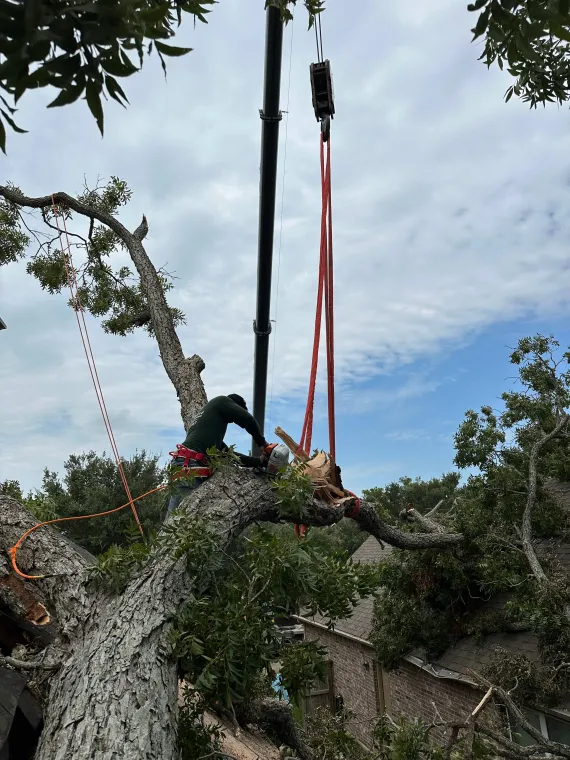

Pruning That Keeps Trees Healthy and Roofs Clear
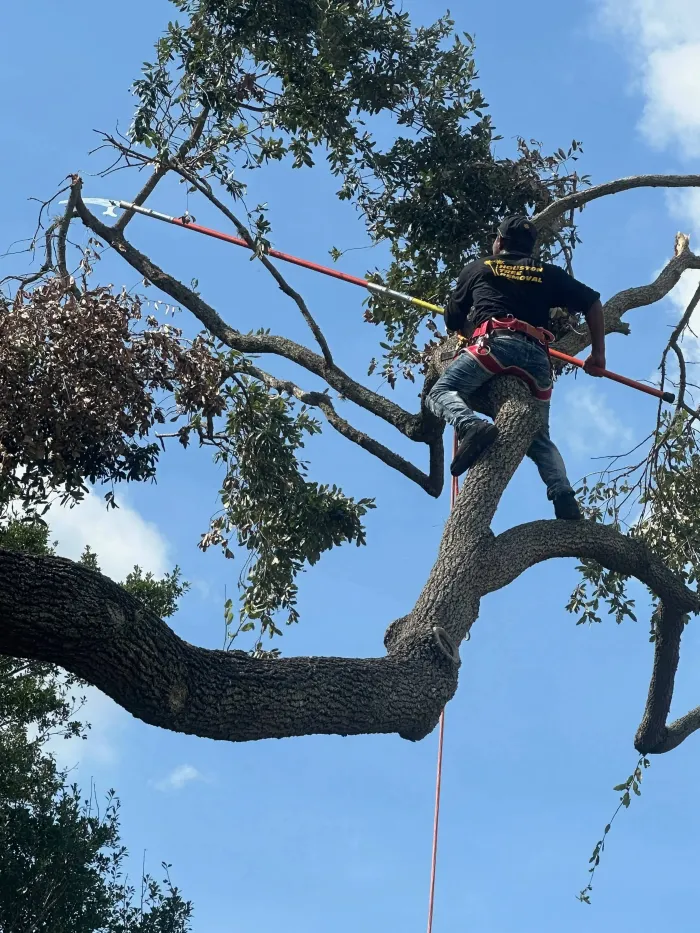
Regular pruning is the cheapest tree work you will ever pay for. A trimmed canopy sheds wind instead of catching it, which is what keeps limbs off your roof when the next Gulf storm rolls through. It also keeps light and air moving through the tree, which is how you head off the fungal problems that thrive in Houston humidity.
We prune to ANSI A300 standards, the industry specification for how cuts should be made. That matters more than it sounds. Bad pruning cuts do not heal; they leave wounds that invite decay and cost you the tree a decade later. We never top trees, because topping ruins a tree’s structure permanently and produces weak regrowth that is more likely to fail in a storm, not less.
What Our Trimming Service Covers
- Crown Cleaning: Removing dead, dying, diseased, and crossing branches. This is the baseline service for a mature shade tree and the one that does the most for its long-term health.
- Crown Thinning: Selectively reducing canopy density so wind passes through instead of pushing against it. Thinning is the most effective pruning you can do ahead of hurricane season.
- Crown Raising: Lifting the lower canopy to clear roofs, gutters, driveways, and walkways, without stripping so much of the lower limb structure that the tree is weakened.
- Deadwooding: Taking out dead limbs hanging over patios, driveways, and play areas. Deadwood does not announce when it is going to drop, which is exactly the problem.
- Structural Pruning: Shaping young trees to build sound branch architecture early, so they do not develop the weak, competing leaders that fail fifteen years later.
Why Choose Us for Tree Trimming?
- We Prune to Standard: Every cut is made to ANSI A300 specification at the branch collar, so the wound closes properly instead of becoming an entry point for decay.
- We Do Not Top Trees: Topping is permanently damaging and we will not do it. If a tree is genuinely too large for its space, we will recommend reduction pruning or removal and explain why.
- Timed to the Species: Oaks get pruned in the dormant season to reduce oak wilt risk. We schedule around what each tree needs rather than whatever is convenient.
- Cleanup Is Included: We chip and haul the brush and rake the work area before we leave. Debris removal is in the quoted price, not added on afterward.

Tree Trimming & Pruning Questions
How often should trees be trimmed in Houston?
Most mature shade trees do well on a three to five year cycle. Fast-growing species like water oak, Chinese tallow, and Bradford pear often need attention every two to three years, and young trees benefit from light structural pruning more frequently than that. Anything hanging over a roof should be checked annually.
What is the best time of year to prune?
Late winter dormancy, roughly December through February, is ideal for most species here, because the tree is not actively growing and the wounds close quickly in spring. Oaks specifically should be pruned in the dormant season to reduce oak wilt risk. Dead or dangerous limbs are the exception and can be removed any time.
Do you top trees?
No. Topping is the practice of cutting main branches back to stubs, and it permanently damages the tree. It triggers weak, densely-attached regrowth, exposes the trunk to sunscald and decay, and leaves you with a more hazardous tree than you started with. If a tree is genuinely too large for its space, the honest answer is reduction pruning or removal, and we will tell you which.
Will you clean up the branches?
Yes, every time. Debris removal and cleanup are included in the quoted price. We chip and haul the brush and rake the work area before we leave, with no separate disposal charge added afterward.
Can trimming save a tree that looks unhealthy?
Often, yes. Deadwooding and thinning can turn around a tree that is struggling from crowding, poor air circulation, or minor storm damage. It will not save a tree with advanced root rot or a structurally compromised trunk. We will look at the root flare and trunk before recommending either way.
Get A Free Estimate For Tree Services Today!
Schedule An Estimate
 (832) 596-5133
 Click To Email Us
 Houston, TX