


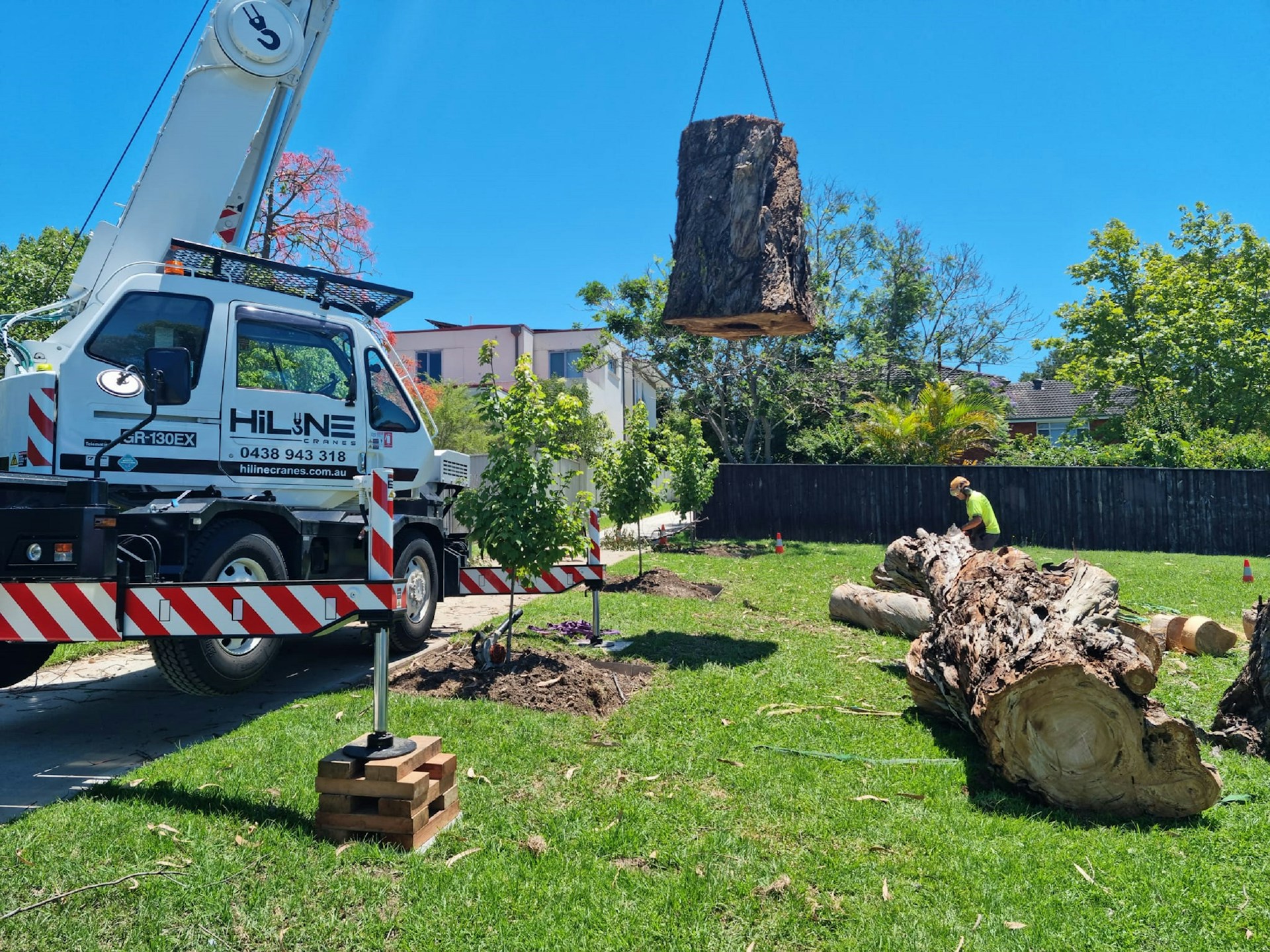
A crane is not needed for every large tree removal. But when a tree is unstable, damaged, or boxed in by valuable property, crane support can give us much more control. Instead of letting heavy sections come down into a tight work area, we can secure them, lift them clear, and move them away from danger.
In Houston, mature oaks, pines, palms, and other tall trees face heavy rain, high winds, saturated soil, pest damage, and years of unchecked growth. Late September is a smart time to look closely at questionable trees, especially while hurricane season is still active. As a family-owned, fully insured team, we inspect the tree and the space around it to decide whether standard removal or crane support is the safer path.
Protect Your Property When a Tree Becomes Unstable
Crane-assisted removal is a controlled solution for trees with higher risks, not simply a service for the biggest trees on the block. A large tree may stand over a home, business, vehicle, fence, pool, or neighboring property with very little room below it. In those situations, dropping or lowering pieces by conventional methods may create avoidable risk.
With crane tree removal in Houston, we can attach heavy limbs or trunk sections to the crane before cutting. The crane supports the weight and carries each piece toward a clear processing area. That added control helps us protect the places you use every day.
A ground-level view does not always show the full problem. Internal decay, weak branch connections, shifting roots, and hidden damage may be hard to spot without a professional evaluation. We look at the tree’s condition, its lean, nearby structures, overhead hazards, and available access before recommending a removal method.
Severe Leaning and Structural Failure Raise the Stakes
A tree that suddenly starts leaning deserves attention, especially when the lean points toward a roof, driveway, garage, pool, or commercial building. This change can point to root failure, moving soil, storm damage, or decay inside the trunk. When the expected fall path leaves little room for error, taking the tree apart from the ground can become much more difficult.
We also watch for signs that the tree may not hold together as expected during removal, including:
- Large cracks running through the trunk
- Split branch unions where heavy limbs meet
- Hollow spots, fungal growth, or loose bark
- Dead limbs concentrated on one side
- Roots lifting or soil heaving around the base
These conditions can make climbing, rigging, and conventional lowering riskier for both workers and surrounding property. A damaged limb can break without warning, and a weakened trunk may not respond predictably once weight begins shifting.
Crane tree removal in Houston gives our crew a way to secure heavy sections before they separate. Rather than relying on gravity alone, we can lift a limb or trunk piece in a planned direction and move it away from the danger zone. This is especially helpful in residential neighborhoods where homes are close together and at commercial sites with buildings, parking areas, and traffic nearby.
Tight Access Can Make Ground Removal Unsafe
Limited access is one of the clearest reasons we may recommend crane assistance. Many Houston properties have narrow side yards, closely spaced homes, backyard pools, patios, sheds, fences, gardens, and hardscapes that leave little open space for large branches.
A tree growing between buildings can create a difficult puzzle. Even if it is stable enough to dismantle in smaller pieces, standard rigging may not offer enough clearance around rooflines, windows, HVAC equipment, solar equipment, or outdoor living areas. Dragging heavy material across a lawn or paver patio can also cause damage after the cut is complete.
When site conditions allow, a crane can lift sections over obstacles and set them in a designated area for processing. This approach may reduce the need to move heavy wood through yards, gardens, and driveways. For commercial properties, it can also help us plan work around customer access, parking areas, and regular business activity.
Storm Damage Calls for Crane Tree Removal in Houston
Late-summer thunderstorms, tropical systems, and hurricane-related winds can leave behind trees that look standing but are no longer sound. A trunk may be split, roots may be partly lifted, or a large limb may be hanging in the canopy above a home or driveway. These are not routine cleanup situations.
Storm-damaged trees can be unpredictable for several reasons:
- Broken limbs may be suspended overhead
- Trunks can have internal fractures that are not obvious
- Saturated soil can weaken root support
- Loose branches may shift as crews work nearby
- Damage near power lines or public areas limits safe work space
In these cases, we may use a crane to lift large damaged sections away from homes, driveways, and other exposed areas. The goal is to avoid cutting a piece loose and hoping it falls where intended. If a tree has storm damage, keep people and pets away from the affected area. Avoid trying to cut, pull, or climb the tree yourself, since even a small movement can change how a damaged tree behaves.
Oversized Trees Near Buildings Need Added Control
Sometimes the main concern is the tree’s size and position. Mature trees with wide canopies, thick trunks, and heavy limbs can be hard to dismantle when they tower over two-story homes, apartment buildings, offices, warehouses, or parking lots. The tree may be healthy enough to remove in sections, but the size of those sections can still exceed what ropes and ground crews can safely manage.
Crane support allows us to hold the weight of each piece during cutting instead of depending on gravity to bring it down. Once the cut is complete, the crane moves the section away from the structure in a controlled direction. This can make a major difference when there is no safe drop zone below.
Planning matters just as much as equipment. Before crane-assisted work begins, we assess crane placement, site access, work-zone safety, nearby traffic, overhead hazards, the tree’s condition, and the space needed for crews and equipment. Removing a tree safely means protecting people, buildings, vehicles, and the surrounding property from start to finish.
Schedule a Safer Removal Before Conditions Worsen
If you notice a new lean, cracking wood, lifted roots, storm damage, oversized limbs, or a tree growing too close to a structure, it is wise to have it assessed before the next round of rough weather. Early attention can keep a manageable tree project from turning into an emergency.
Late September is a useful checkpoint for Houston properties. A professional evaluation can help determine whether trimming, standard removal, stump grinding, or crane-assisted removal fits the tree and the site. The safest choice depends on the tree’s condition, what sits beneath it, and how much room is available to work.
Protect Your Property With the Right Removal Plan
Tree Removal Houston can assess access, lifting needs, and nearby structures before work begins. For complex jobs, our crane tree removal in Houston service helps us remove difficult trees with controlled precision. Contact us to request an evaluation and discuss the safest approach for your property.

 (832) 596-5133
 Click To Email Us
 Houston, TX