


Act Fast to Reduce Post-Storm Tree Risks
Houston windstorms can leave behind more than a messy yard. A split limb, leaning trunk, lifted roots, or damaged tree near your home can turn into a serious problem long after the wind dies down. Quick, thoughtful decisions help protect people, vehicles, buildings, and neighboring properties.
Although hurricane season is winding down by late November, strong thunderstorms, heavy rain, and sharp wind events can still affect Houston through the holiday season and beyond. We recommend putting safety ahead of cleanup. Start by spotting urgent hazards, then arrange professional help for damaged trees before routine debris becomes the focus.
Put Life Safety Ahead of Storm Debris
Before walking around the property, take a careful look from a safe distance. Keep children, pets, tenants, employees, and visitors away from hanging limbs, cracked trunks, fallen branches, and trees that have shifted toward a structure or walkway. A tree can look stable but still fail without warning, especially when rain has softened the ground around its roots.
Pay close attention to these areas first:
- Trees leaning toward homes, garages, fences, or parked vehicles
- Broken limbs hanging above driveways, sidewalks, patios, or entrances
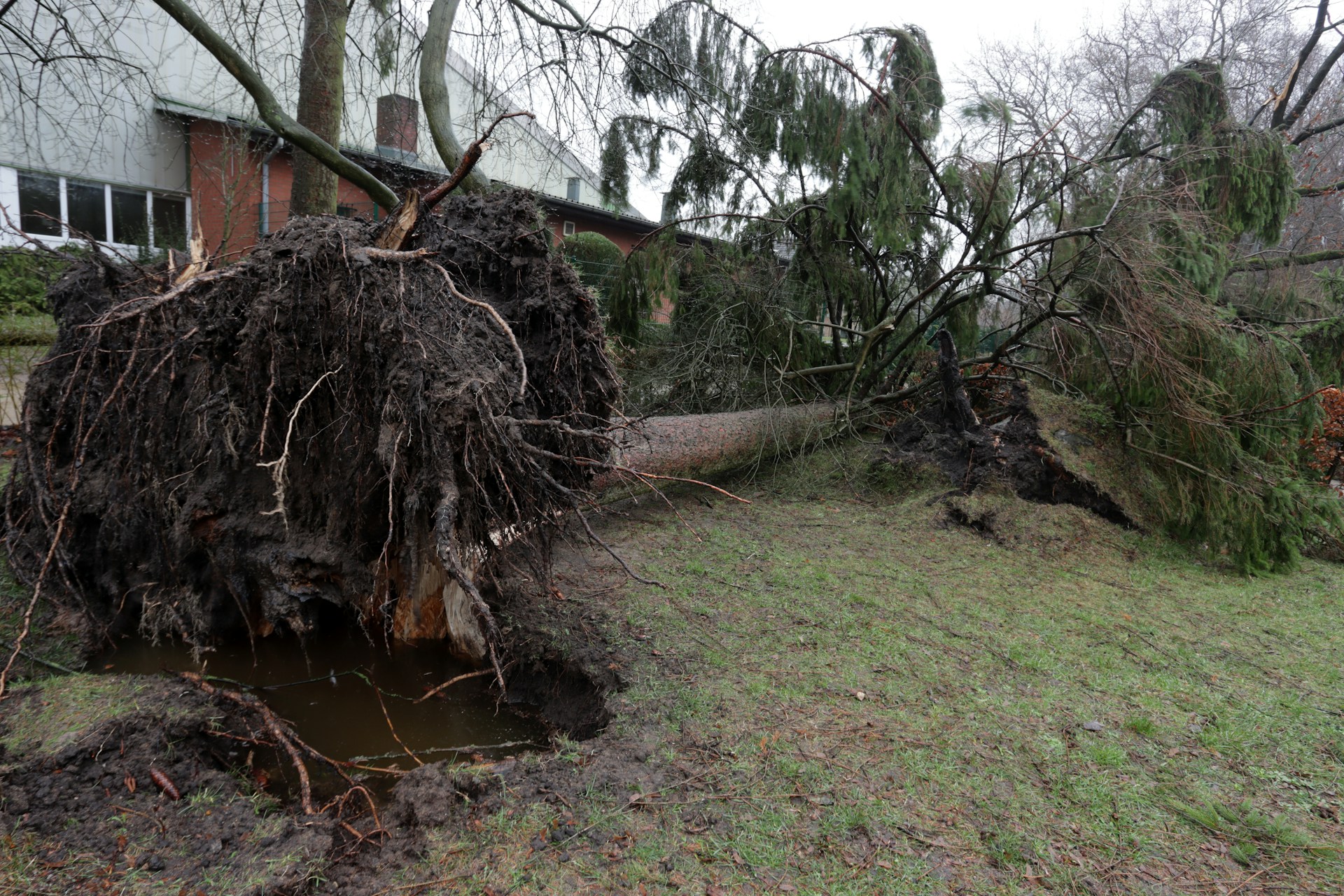
- Trees with roots pushed up from the ground
- Branches touching utility lines or sitting near electrical equipment
Any tree or limb near a power line should be treated as an electrical emergency. Stay well away from the area, including nearby fences and standing water. Do not touch the tree, try to move a branch, or attempt to clear the line yourself. If lines are down or sparking, emergency services or the utility provider should be notified right away. Work near energized lines belongs in the hands of qualified professionals.
Once major hazards are secured, small branches in an open, safe area can wait their turn. We do not recommend climbing ladders, operating chainsaws around unstable limbs, or trying to pull a tree off a roof, vehicle, or building. Storm-damaged wood can shift, snap, or roll in unexpected ways. When the damage is significant, a professional assessment is the safest first move.
Recognize Trees That Need Immediate Attention
A tree that made it through the first burst of wind may still be damaged inside. Broken fibers, cracked wood, and stressed roots can weaken over time, causing the tree or a large limb to fail later. That is why we encourage property owners to look for signs of structural damage instead of judging a tree by how much debris is on the ground.
Warning signs that deserve prompt attention include:
- A newly leaning trunk
- Exposed roots, lifted soil, or cracks around the base
- A split trunk or bark pulling away from the wood
- Large limbs hanging or caught in the canopy
- A tree resting against another tree, fence, or structure
Location matters just as much as the damage itself. A cracked limb over an empty corner of a yard may not carry the same immediate concern as one over a front entry, driveway, pool, or sidewalk. For commercial properties, we suggest checking customer entrances, employee parking areas, loading zones, and public walkways early in the process.
When a damaged tree presents a clear threat, storm tree removal in Houston may be the right next step. We can assess whether careful trimming may preserve the tree or whether removal is the safer option. Scattered twigs and small limbs are usually cosmetic damage. A split trunk, uprooted base, or heavy limb over an occupied area is a different situation and calls for professional action.
Choose Storm Tree Removal in Houston When Hazards Escalate
Some storm damage cannot wait for a regular cleanup plan. Trees resting on roofs, blocking driveways, closing off access routes, or leaning into buildings need immediate attention. The same is true for trunks split near the base, uprooted trees, and heavy limbs suspended above places where people walk, park, or gather.
Storm tree removal in Houston requires more than cutting visible branches. Wind-damaged trees may be under pressure, tangled in nearby limbs, or braced against a structure in an unstable position. Removing one section without a plan can cause the remaining tree to shift suddenly. We use the proper equipment and controlled cutting methods to handle hazardous material as safely as conditions allow. Rigging and cranes may be needed when a tree is too large, too close to a structure, or too dangerous to remove by ordinary means.
Houston-area properties bring their own challenges after storms. Saturated ground, dense neighborhoods, overhead utilities, and debris-filled access points can all affect how removal work is planned. As a family-owned, fully insured tree care company, we help residential and commercial property owners sort out the highest-priority hazards, clear blocked access areas, and plan follow-up care such as trimming, stump grinding, landscaping, or lawn repair.
Document Damage and Restore Your Property Safely
If it is safe to do so, take clear photos before cleanup begins. Capture the damaged tree, nearby structures, vehicles, fences, and the surrounding ground. These photos can help create a record of the storm’s impact and may be useful when you speak with your insurance provider. Do not step into an unsafe area just to get a better picture.
A smart cleanup order keeps attention on the biggest risks first:
- Reopen emergency routes, driveways, sidewalks, and business entrances
- Remove hazardous trees and suspended limbs
- Clear routine branches and scattered storm debris
- Address stumps, lawn damage, and landscaping restoration afterward
This order helps prevent time and energy from going toward low-priority debris while a larger tree problem remains nearby. It also makes the property easier and safer for crews, residents, customers, and delivery vehicles to move around.
Late-fall restoration is also a good time to inspect nearby trees that may not show obvious damage. A tree can have hidden cracks, root stress, or canopy damage after a wind event. Professional pruning may be needed to remove broken growth before another round of rain and wind arrives. Keeping an eye on damaged trees now can reduce the chance of another surprise failure later in the season.
Get Prompt Help With Storm-Damaged Trees
Tree Removal Houston can assess hazardous conditions and provide dependable storm tree removal in Houston when damaged trees threaten your property. Our crew can help prioritize the work needed to restore safer access and protect surrounding structures. For timely assistance, contact us to discuss your situation.

 (832) 596-5133
 Click To Email Us
 Houston, TX


